
Baseball Recruiting Fall Timelines
Fall is not an “off-season” in the college recruiting process. It is one of the best times for players and families to get organized, build relationships, and make a smart plan before the spring and summer calendar fills up. The goal is not to do everything—it is to do the right things at the right time.
Why the Fall Matters
College coaches are evaluating rosters, watching video, reviewing academic information, and planning their upcoming recruiting classes. For players, the fall provides a valuable window to present a complete profile without the pressure of a packed tournament schedule.
● Update your baseball resume, measurables, video, and academic information.
● Identify realistic target schools based on level, roster needs, academics, geography, and overall fit.
● Use fall games, workouts, and carefully selected events to create fresh evaluation opportunities.
● Begin or continue thoughtful communication with programs that fit—not mass emailing every college.
A Practical Fall Timeline
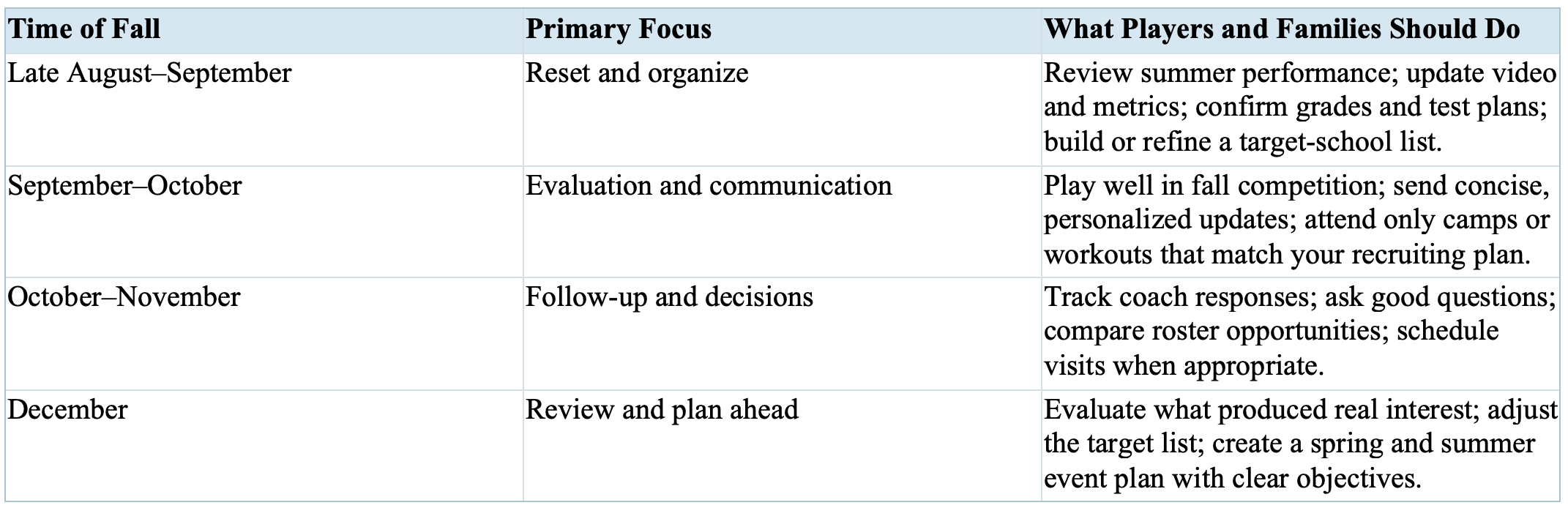
Fall Priorities by Graduation Class
Every player’s timeline is different. The right fall plan depends on age, development, position, academic profile, and recruiting momentum.
Freshmen and younger players
Development comes first. Focus on skill growth, athletic habits, grades, and learning how to compete. Exposure should be selective—not a race to collect offers.
Sophomores
Establish a recruiting baseline: current measurables, useful video, school research, and a clearer sense of realistic program levels.
Juniors
Recruiting should become intentional. Stay in front of target schools, seek repeated evaluations, communicate professionally, and use visits or camps when there is a clear next step.
Seniors
Focus on final decisions and continued options. Respond promptly and evaluate academics, roster outlook, financial details, campus, and overall fit.
What to Send a College Coach
A fall update does not need to be long. A clear, personal message is more effective than a generic email. Include:
● Your name, graduation year, position, school, and travel team.
● A brief update on fall schedule, recent performance, or an upcoming event.
● Current video or verified measurables when they add meaningful information.
● Academic information and why you believe the program may be a fit.
● A simple call to action, such as asking whether the coach will be at an upcoming event or would like additional information.
Do Not Confuse Activity with Progress
More emails, camps, and tournaments do not automatically create better recruiting outcomes. Before adding an event, ask: Will the right schools be there? Do they know who the player is? Will the player receive a meaningful evaluation? What is the next step if the event goes well?
Showtime’s Fall Approach
At Showtime, we want each player’s fall plan to be targeted and realistic. We can help families organize information, identify attainable programs, choose events, and follow up with coaches. The objective is to build recruiting momentum over time—not force a decision before the player and family have enough information.
Recruiting calendars and contact rules can vary by NCAA division and change from year to year. Confirm current rules and dates through the appropriate NCAA and conference resources, and ask us when you are unsure.
Questions about your player’s fall timeline, an event, target-school list, or coach email? Reach out to us. The best recruiting plan is the one that fits your player and creates a clear next step.
